
Bikers aren’t usually the type to complain about their injuries, but muffler burns are a pain. Treatment depends on how deep the burn goes. Most riders start the same way: cool running water for about 15 minutes, no ice, no popping blisters, a loose non-stick bandage, and a close look at the spot every day for signs of infection. Anything deep, oozing, bigger than a couple of inches, or on a joint or a sensitive part of the body is a reason to be seen by a physician rather than treated at the kitchen sink.
A motorcycle exhaust can reach around 500 degrees. It only takes a second of contact to burn skin, which is why so many of these burns happen while a bike is stopped and barely moving: a foot slips off the peg at a light on Skokie Boulevard, a passenger swings a calf over the pipe, or a low-speed tip-over in stop-and-go traffic pins a leg against the header.
First, Second, or Third Degree: Telling Muffler Burns Apart
Muffler burns are generally first- or second-degree burns.
First-degree burns present with redness and tenderness in the burned area and often look like a bad sunburn. These burns affect just the outer layer of the skin. The area may be swollen but usually does not blister.
Second-degree burns are more severe. They reach the outer layer and the lower layer of skin (the dermis). They appear red and swollen and often have blisters. Second-degree burns are usually very painful and are prone to infection.
Third-degree burns are full-thickness burns. They may appear white or blackened, and the skin may be charred. Third-degree burns often feel numb rather than painful, despite being very severe. Anyone who thinks a burn may be third degree needs medical attention right away. A burn on a sensitive part of the body is another reason to be seen in person.
One thing riders get wrong: the pain level is not a good guide to how bad a burn is. A deep burn destroys nerve endings, so the worst burns can hurt the least at first.
Muffler Burn First Aid at Home
Apply clean, cool water to the area of the burn. Never use ice or ice water; it can deepen the injury. Instead, flush or submerge the area in water that feels slightly cool to the touch. If there is no running water nearby, a clean cloth saturated with water works as a compress. Keep the area wet for about 15 minutes.
Take a pain reliever such as acetaminophen or ibuprofen to manage the pain, unless a doctor has told you otherwise. The first pain often fades as the body releases adrenaline, then comes back once the shock of the injury wears off. That is why many riders take a pain reliever soon after the injury rather than waiting.
Do not pop blisters. Intact blister skin is a barrier against bacteria. Skip butter, ice, toothpaste, and greasy ointments as well. Treat the burn gently and keep pressure off it.
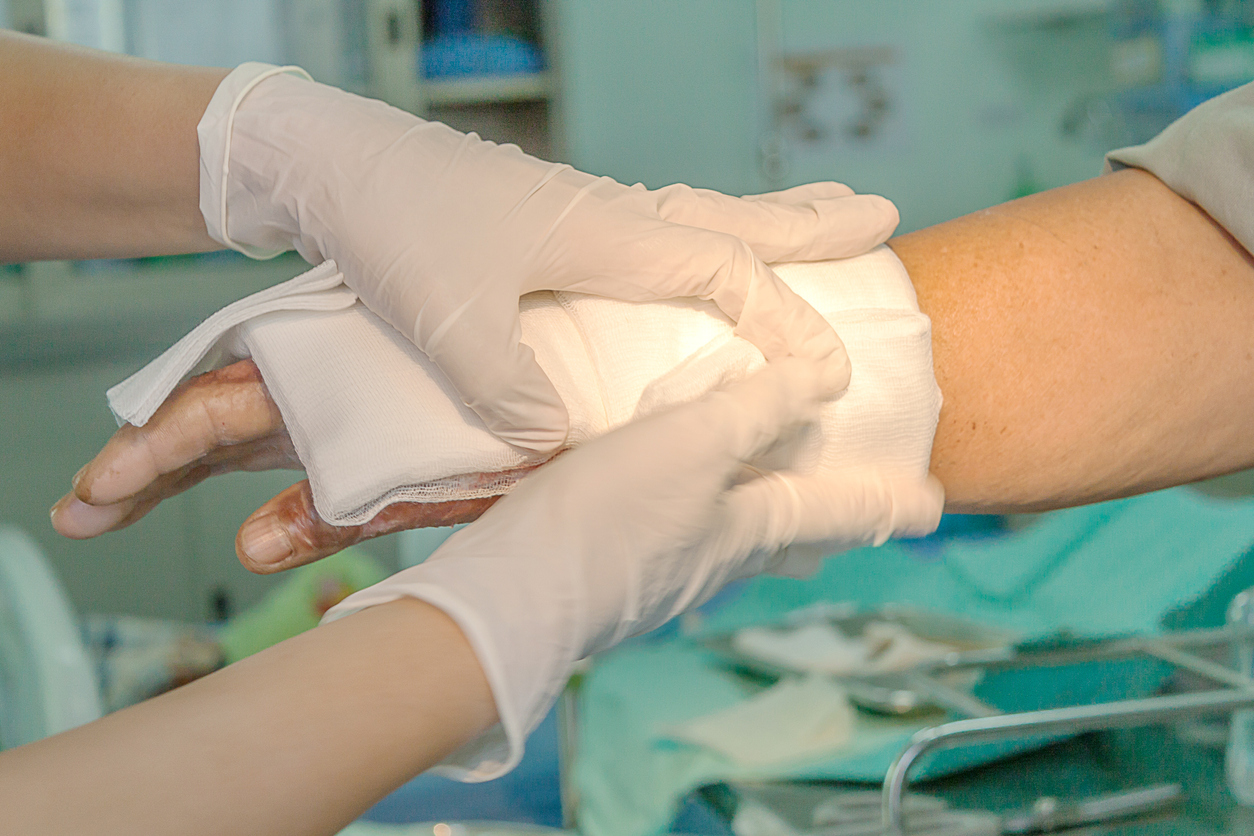
Cover the burned area loosely with a sterile non-stick bandage and secure it without squeezing. Riding gear rubbing over a fresh burn is a common reason a small burn turns into a bad one.
As the burn heals, keep checking it. Burned skin is prone to infection, and the early signs are increased swelling, spreading redness, and pain that gets worse instead of better after the first day or two.
Signs That Send People to a Doctor
- The blistered area is larger than about two inches across, or it is oozing.
- There are signs of infection: fever, swelling, spreading redness, drainage, or pain that keeps climbing.
- It has been more than 10 years since the last tetanus shot.
- Redness spreads past the burn or the tissue damage is widespread.
- Pain lasts longer than a few hours without easing.
- The burn sits over a knee, ankle, or other joint, or on the foot, where scar tissue can tighten and limit motion.
Anyone unsure about the severity of a burn or worried about how it is healing can call a physician or an urgent care clinic. The internet holds a lot of information, but it is not a substitute for someone looking at the wound.
What It Means When a Muffler Burn Fills With Pus
A burn that turns cloudy yellow or green, drains pus, smells bad, or grows a hot red ring around it has likely become infected. Second-degree burns are the usual culprits because the skin barrier is gone. Infection is a medical problem, not a home-remedy problem; it often needs the wound cleaned and, sometimes, antibiotics a clinician prescribes.
Burns that happen in a crash raise the risk, because road grit and bacteria get pressed into the wound at the same moment the skin is damaged. That overlap is why we wrote separately about common infections after a motorcycle accident.
Will a Muffler Burn Leave a Scar?
A lot of riders search for this one after the pain stops. Here is the honest version.
First-degree burns usually fade without a permanent scar, though the skin can stay pink or darker than the surrounding area for weeks or months. Second-degree burns can leave a mark, and deeper ones often do. Third-degree burns generally leave permanent scarring and sometimes need specialty care.
What happens to the mark over time depends on how deep the burn went, whether it got infected, skin tone, and sun exposure while it heals. No one can promise a scar will disappear, and no blog can tell a rider how a particular burn will settle. Dermatologists and burn clinics have options for the appearance of healed scars; that conversation belongs with a doctor who can see the skin.
The legal side of scarring matters too. In an Illinois injury claim, disfigurement is a category of damages a jury can consider, separate from medical bills. That is one reason people photograph a burn every week or two as it heals, under the same light, with something in the frame for scale.
How These Burns Happen Around Chicago
Exhaust burns cluster in slow, crowded riding. August traffic backing up on the Kennedy near the Circle Interchange. A gas stop on Waukegan Road where a hot pipe sits at calf height while someone squeezes past. A left-turning car cutting off a bike on Lake Cook Road, leaving the rider on the pavement with the machine on top of one leg. Passengers and kids account for a surprising share of contact burns, because the pipe is still hot long after the engine goes quiet.
When another driver causes the fall, the burn is part of the crash injury, not a separate problem. Illinois runs an at-fault auto system: the driver responsible for the crash, and that driver’s liability insurance, is who a claim runs against. The first 72 hours after a motorcycle crash matter more than most riders expect, and burns are part of the reason.
When a Leg Burn Becomes Part of a Claim
A few practical things about how burns show up in Illinois injury claims.
A burn treated only at home leaves no record. Riders who tough it out often find, months later, that there is no chart note, no photograph, and no way to show how bad the burn was in week one. Photos with dates and a clinic visit are what make a burn provable.
Keep the gear. Jeans with a melted stripe, a boot with a scorched heel, a torn riding pant: that is physical evidence of contact and force. Bag it and leave it alone.
Get the report number. When police respond to a crash, ask the officer for the report number before leaving the scene. It is how the crash report gets pulled later, and it is faster than reconstructing dates from memory.
Fault is shared by percentage. Illinois uses modified comparative fault, 735 ILCS 5/2-1116. Damages get reduced by a rider’s share of the fault, and a person found more than 50 percent at fault generally recovers nothing.
Deadlines are shorter than people think. In Illinois, the general deadline to file an injury lawsuit is two years, 735 ILCS 5/13-202. Shorter rules apply to claims against a city, village, park district, or other local public body, and there are exceptions that can shorten or extend a deadline. Anyone with a possible claim should confirm the specific date with a lawyer rather than assuming.
When a Muffler Burn Does Not Need a Lawyer
Plainly: most muffler burns do not. A rider who brushes a pipe while backing a bike into the garage has a burn and no claim, because no one else was involved. A small first-degree burn from a parked bike at a friend’s house, healed in a week with no other injuries, is not a case either. Calling a lawyer for that is a waste of an afternoon, and we say so.
Where a lawyer usually helps is when the burn came out of a crash somebody else caused, especially when there are other injuries, a hospital visit, missed work, or lasting scarring, or when an insurer is already asking for a recorded statement. Insurers tend to treat burns as minor by default, which is one version of the pattern we describe in why the adjuster is friendly and the first offer is low.
At Kass & Moses Personal Injury Lawyers, we know motorcycle riding comes with risks. Whether it is a muffler burn, road rash, or a concussion, these injuries interrupt work and riding season. Riders who were hurt by another driver often talk with a motorcycle crash attorney before they give any statement to the other driver’s insurer.
Contact Our Northbrook Motorcycle Accident Law Firm
If you were injured in a motorcycle crash in Northbrook, IL, or elsewhere in Chicagoland and want to talk through your options, contact our Northbrook motorcycle accident lawyers at Kass & Moses Personal Injury Lawyers for a free case review. Every case is different, and general information on this page is not legal advice about any particular situation.
Kass & Moses Personal Injury Lawyers 601 Skokie Blvd Suite 401 Northbrook, IL 60062 (847) 513-9582
Frequently asked questions
It depends on how deep the burn went. First-degree burns usually fade, though the skin can stay discolored for weeks or months. Second-degree burns may leave a mark, and deeper burns often leave permanent scarring. Infection and sun exposure while the burn heals can make scarring worse. No one can promise a scar will disappear; a doctor or dermatologist who can see the skin is the right person to ask about options.
Cloudy yellow or green drainage, a bad smell, spreading redness, or fever generally point to an infected burn. Burned skin has lost its barrier, and crash burns often have grit pressed into them. Infection usually needs the wound cleaned professionally and sometimes antibiotics, so people with those signs are typically seen at a clinic or urgent care rather than treating it at home.
Healing time varies with depth. Shallow, sunburn-type burns often settle within a week or two. Blistered second-degree burns commonly take several weeks and need the area kept clean and protected from gear rubbing on it. Deeper burns take longer and may need specialty care. A clinician who examines the burn can give a realistic timeline for that wound.
When another driver causes a crash or a tip-over and the rider’s leg is burned against the pipe, the burn is part of the crash injury. Illinois is an at-fault state, so the claim runs against the responsible driver and that driver’s liability insurance. Damages can include medical treatment and, where the burn leaves a lasting mark, disfigurement. Fault is shared by percentage under 735 ILCS 5/2-1116, and a person found more than 50 percent at fault generally recovers nothing.
Usually not. A burn from your own hot pipe while parking or loading a bike involves no one else, so there is nothing to claim. Small burns that heal in a week with no other injuries do not generally call for a lawyer either. A lawyer more often helps when the burn came from a crash another driver caused, there are other injuries or missed work, scarring may be permanent, or an insurer is asking for a recorded statement.