
The Driver Took Off. Now What? A Cyclist’s Guide to Hit-and-Run Crashes and the Insurance Coverage You Didn’t Know You Had
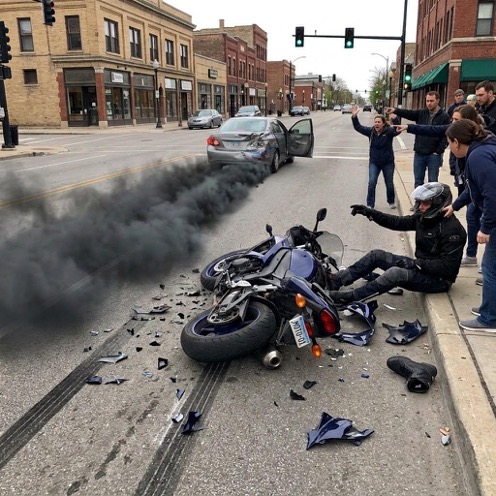
Few experiences are more infuriating than being knocked off your bike by a driver who doesn’t even stop. You’re hurt, your bike is damaged, and the person responsible is gone. Many cyclists assume that’s the end of the story: no driver, no insurance, no recovery.
Very often, that assumption is wrong. This guide covers what to do in the aftermath of a hit-and-run, how drivers get found more often than you’d think, and—most importantly—the insurance coverage most cyclists don’t realize they already have. Our aim is to inform, not to pressure. Take this knowledge with you regardless of what you decide to do next.
In the Immediate Aftermath: Focus on What You Can Control
Your instinct may be to chase the car or memorize the plate. Understandable—but your first job is your own safety and health. Get out of the roadway, assess yourself, and call 911. Then, as soon as you’re able:
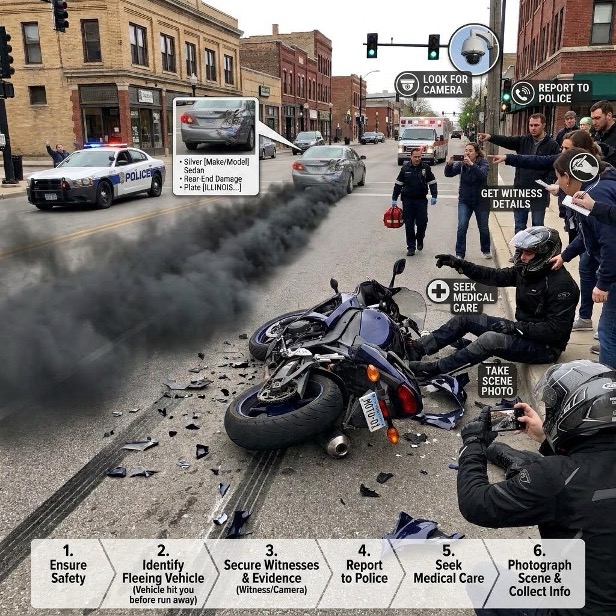
- Write down everything you remember about the vehicle: color, make, body style, damage, plate fragments, bumper stickers, direction of travel. Even partial details help—”silver pickup with a ladder rack heading north” has identified more than one driver.
- Ask witnesses immediately. Someone nearby may have caught the plate or even video. Get names and numbers before people scatter.
- Look for cameras. Intersections, gas stations, storefronts, transit stops, and residential doorbells. Note their locations—footage is often overwritten within days, so requests need to happen fast.
- Report to police right away. A prompt police report isn’t just about catching the driver. Many insurance policies require timely reporting of hit-and-runs as a condition of coverage.
- Get medical care and photograph everything—your injuries, your bike, your gear, the scene.
One more: if you ride with a bike camera or GPS unit, preserve that data immediately. A rear-facing camera can be the whole case.
Drivers Get Found More Often Than You’d Expect
It feels hopeless in the moment, but hit-and-run drivers are identified regularly through:
- Traffic and business camera footage
- Partial plate numbers matched to vehicle descriptions
- Paint transfer and vehicle debris left at the scene (a broken mirror housing can identify a make and model)
- Body shops reporting suspicious front-end repairs
- Witnesses and, increasingly, neighborhood camera networks
The window for most of this evidence is short. This is one scenario where moving quickly—or having someone move quickly on your behalf—genuinely changes outcomes.
The Coverage Most Cyclists Don’t Know They Have
Here’s the part of this article we most want you to remember: if you own a car with uninsured motorist (UM) coverage, that coverage very likely protects you as a cyclist.
It sounds strange, but it’s true in most states: UM coverage follows you, the person—not just your car. If you’re struck by a hit-and-run driver (legally treated like an uninsured driver in most policies) while riding your bike, your own auto policy’s UM benefits can cover:
- Medical bills
- Lost wages
- Pain and suffering
- In some policies, your damaged property
The same is often true of underinsured motorist (UIM) coverage when a driver is identified but carries minimal insurance that can’t cover serious injuries.
A few important nuances:
- You may be covered under a household member’s policy. If you live with a spouse, parent, or family member who has UM coverage, their policy may extend to you even if you don’t own a car yourself.
- Deadlines and notice requirements are strict. UM claims often require prompt notice and, for hit-and-runs, a timely police report. Waiting weeks can jeopardize coverage.
- Your own insurer is not automatically on your side. This surprises people. A UM claim puts your insurer in the position of paying you—which means their adjusters evaluate (and sometimes resist) your claim much like an opposing insurer would. Friendly branding aside, it’s still a negotiation.
What About Your Health Insurance and Your Bike?
While the liability picture develops, use your health insurance for treatment—don’t delay care waiting for fault to be sorted out. Be aware your health insurer may have a right to reimbursement from any later settlement (called subrogation); this is normal and manageable.
For your bike and gear: document replacement costs with receipts or current retail prices. Quality bikes, components, and kit add up quickly, and insurers routinely undervalue them without pushback.
Where an Attorney Adds Value in Hit-and-Run Cases
Candidly, hit-and-run and UM cases are the ones where cyclists most often benefit from help, because they involve: fast-moving evidence, strict notice deadlines, an investigation to identify the driver, and a negotiation with your own insurer—who knows exactly how their policy language works.
That said, the right first step isn’t hiring anyone. It’s a conversation. A free consultation can tell you what coverage likely applies, what deadlines you’re facing, and whether the investigation is worth pursuing. If your losses are modest and coverage is clear, you may be fine on your own—and we’ll say so plainly.
If you’re staring at a hit-and-run situation and don’t know where to start, Kass & Moses, PC is happy to be a sounding board at 844-Bicycle or 847-513-9582. No cost, no obligation—just answers.
This article is for general information only and is not legal advice. Insurance requirements, UM/UIM rules, and deadlines vary by state and by policy. For guidance on your specific situation, consult a licensed attorney in your area.
We proudly serve clients throughout Northbrook, Lake County, IL, and nearby areas, including Waukegan, Gurnee, North Chicago, Highland Park, Round Lake Beach, Zion, Grayslake, Libertyville, Lake Zurich, Lake Forest, Antioch, Highwood, Mettawa, Mundelein, Vernon Hills, Round Lake, Lindenhurst, and Beach Park.
Kass & Moses Personal Injury Lawyers
601 Skokie Blvd Suite 401
Northbrook, IL 60062
(847) 513-9582