

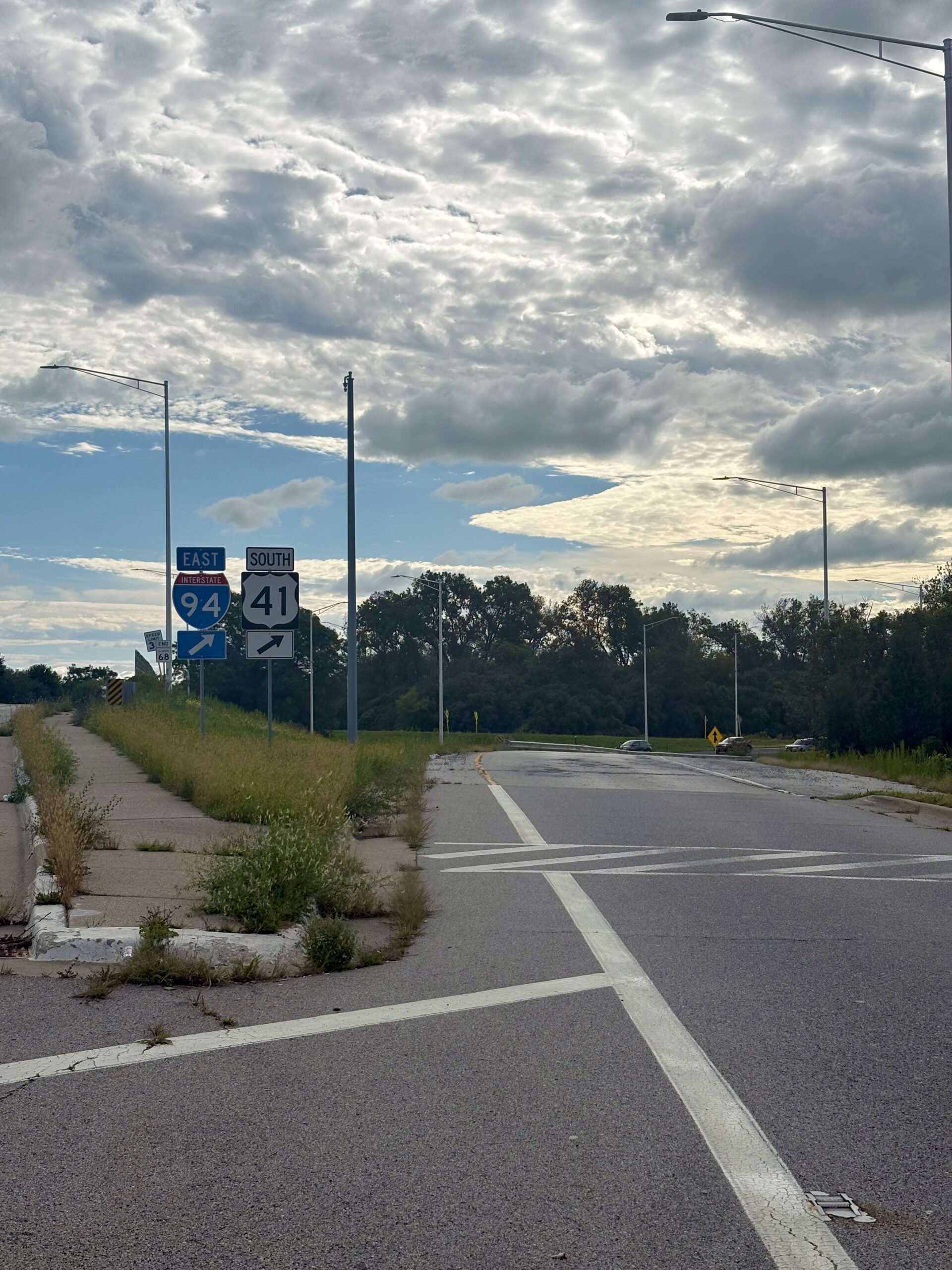
You’re on the shoulder of the Edens near Dundee Road with your hazards on, or stopped in the middle of Roosevelt Road in Berwyn, and your phone is at 12 percent. A tow truck is coming. Someone is asking if you’re okay and you say yes, because that’s what people say.
Here is what generally happens next, in order, and where the decisions actually matter.
The short version
- Police come or they don’t. Either way, a written record of the crash gets created, and you want the report number.
- A doctor’s visit in the first day or two does two things: it catches injuries people miss, and it ties any injury to the crash in the records.
- The other driver’s insurance company usually calls within a day. They will ask for a recorded statement. Nothing in Illinois law requires giving one.
- Illinois is an at-fault state, not a no-fault state. The at-fault driver’s liability insurance pays, and fault can be split between drivers by percentage.
- The general deadline to file an injury lawsuit in Illinois is two years (735 ILCS 5/13-202), but shorter notice rules apply to crashes involving a city, village, or transit agency. Exceptions exist, and the date is worth confirming with a lawyer.
- Plenty of minor crashes with no injury never need a lawyer at all.
The rest of this guide walks through each step.
The first 24 hours
The crash report and its number
In Chicago, a squad car may not come out for a crash with no injuries and drivable cars. When police do respond, the officer completes an Illinois Traffic Crash Report, and the report number is the one piece of paper every insurer, body shop, and lawyer will ask for.
When no officer investigates, Illinois generally requires the drivers themselves to file a written crash report within 10 days if someone was injured or killed, or if property damage passed the statutory threshold (625 ILCS 5/11-406). Reports go to the Illinois Department of Transportation. Local police departments and the Chicago Police Department also keep copies you can request, usually within a week or two of the crash. We have a separate post on how Illinois crash reports work and how to get one.
One thing people get wrong: the officer’s opinion on the report is not a ruling. Officers sometimes note a contributing cause or issue a citation, and insurers weigh that, but an adjuster or a jury can reach a different conclusion about fault.
Photos that matter later, not just the dented bumper
Most people photograph the damage and stop. The photographs that turn out to matter are the wider ones: the position of both cars before they’re moved, skid marks, the traffic signal you were facing, the stop sign hidden behind an overgrown branch, the ice patch, the construction barrel out of place. Get the other driver’s plate, insurance card, and license in a photo rather than writing them down.
If there are witnesses, a name and a cell number is enough. Witnesses scatter fast at places like the Lake Cook Road and Skokie Boulevard intersection, where traffic will not wait.
“I feel fine” is the costliest sentence of week one
Adrenaline hides a lot. Neck and back injuries, concussions, and shoulder tears often announce themselves one to three days later, once the swelling sets in. Two things happen when someone skips the doctor and then goes in ten days later hurting: the medical record starts late, and the insurer argues that something else caused the problem.
Getting checked out early is a health decision first. It also happens to be the single cleanest way to connect an injury to the crash. Our post on what to do after a car accident in the first two weeks breaks the timing down day by day.
When the other driver’s insurance calls
The call usually comes within 24 to 48 hours, and it is friendly. The adjuster has a job to do: confirm coverage, lock down a version of how the crash happened, and find out how hurt people are before anyone knows the answer.
A recorded statement is exactly what it sounds like, a recorded question-and-answer session that becomes part of the claim file. Illinois law does not require giving one to the other driver’s insurer. Your own policy is different: most policies contain a cooperation clause, so people generally do talk to their own company.
The questions that cause trouble are the open ones. “How are you feeling today?” answered with “better, thanks” on day three becomes an exhibit on month nine. “How fast were you going?” invites a guess that gets treated as a measurement.
Early offers show up the same way. A few hundred or a few thousand dollars, offered before an MRI, before a specialist, before anyone knows whether the pain is a strain or a disc. Signing a release closes the claim for good. There’s more on why the first number is what it is in why the adjuster is friendly and the first offer is low.
Medical care and who pays the bills while the claim is open
This surprises people: the at-fault driver’s insurer does not pay medical bills as they come in. It pays once, at the end, in a lump sum, if liability is resolved.
In the meantime, bills generally run through:
- Health insurance. Regular coverage, with the usual deductible and copays. The health plan may later assert a right to be repaid out of a settlement.
- MedPay. Optional coverage on an Illinois auto policy, often $1,000 to $10,000, that pays medical bills no matter who caused the crash. Many drivers have it and don’t know it. Worth checking the declarations page.
- Provider liens. A hospital or doctor can treat and place a lien against any eventual settlement instead of billing insurance.
Illinois puts a ceiling on that last category. Under the Health Care Services Lien Act, 770 ILCS 23, the total of all health care liens is generally capped at 40 percent of the judgment or settlement, with further limits on how much any one group of providers can take. That cap is a large part of why the check a person actually receives differs from the headline settlement figure, and why lien reduction is real work rather than paperwork.
Who is at fault under Illinois law
Illinois uses modified comparative negligence with a 51 percent bar, set out at 735 ILCS 5/2-1116. In plain terms: if an injured person is found more than 50 percent responsible for the crash, they recover nothing. At 50 percent or less, they can recover, reduced by their share. Twenty percent at fault means 20 percent less.
Adjusters assign those percentages early and often on thin information. A left turn across Ridge Avenue, a rear-end chain on the Kennedy near Ohio Street, a lane change on the Tri-State: each one gets a liability decision written by someone who was not there, based on the report, the photographs, and the statements.
So an insurer saying “you were partly at fault” is not the end of a claim in Illinois. It is an opening position, and it is frequently negotiated or litigated down. Certain crash types have their own fault patterns worth knowing: who is at fault in a T-bone collision covers one of the most argued-about ones.
Your deadlines
The general rule for personal injury in Illinois is two years from the date of the crash (735 ILCS 5/13-202). Property damage claims generally get longer. Several situations shorten or change the clock:
- A city, village, park district, or other local public entity. Generally one year to sue under 745 ILCS 10/8-101. That covers a crash with a municipal truck or a snowplow, and some road-condition claims.
- The CTA. Written notice within six months and suit within one year for injuries on its buses and trains, under 70 ILCS 3605/41.
- A child. For a minor, the injury clock is generally tolled, with the two years typically running from the 18th birthday (735 ILCS 5/13-211).
- A death. Wrongful death actions are generally subject to their own two-year period (740 ILCS 180/2).
Every one of these has exceptions and wrinkles, and missing a deadline ends a claim no matter how clear the fault was. Anyone unsure which deadline applies should get the date confirmed by a lawyer rather than counting on a rule of thumb from the internet, including this one.
The coverage that actually pays
Illinois requires liability limits of at least $25,000 per person and $50,000 per crash for injuries, plus $20,000 for property damage. People call it 25/50/20. A meaningful number of drivers carry exactly that and nothing more.
When a hospital stay alone can exceed a $25,000 limit, the next places to look are on your own policy:
- Uninsured motorist (UM) coverage applies when the at-fault driver has no insurance or fled. Illinois auto policies are generally required to include it.
- Underinsured motorist (UIM) coverage applies when the at-fault driver has some insurance, but less than your own UIM limit. It fills part of the gap.
UM and UIM claims are made against your own insurer, which changes the tone of the conversation. A hit-and-run on Lower Wacker or a crash with an uninsured driver in Cicero often becomes a UM claim with notice requirements of its own. I was hit by a driver who does not have insurance walks through that path.
Rideshare crashes follow different rules again, because commercial coverage may sit above the driver’s personal policy depending on what the app was doing at the time.
From claim to demand letter to negotiation
The order rarely changes, and the timeframes are longer than people expect.
- Claim opened, days 1 to 7. Both insurers set up files, assign adjusters, and decide liability on the property damage side first. The car gets settled or totaled long before the injury claim moves.
- Treatment, weeks to months. The injury claim generally waits until treatment finishes or reaches a plateau, because no one can value an injury that is still changing.
- Records gathering, 30 to 90 days. Providers are slow. Requesting complete records and itemized bills from a hospital system takes weeks, sometimes longer.
- The demand. A written package laying out liability, the medical record, the bills, lost income, and the effect on daily life, with a demand figure.
- Negotiation, 30 to 120 days. Counteroffer, phone calls, more counteroffers. Some claims resolve here. Some stall over fault percentages or over whether treatment was “necessary.”
- Filing suit, if it comes to that. A lawsuit is filed when the deadline is approaching or negotiation is going nowhere.
Start to finish, an injury claim that settles without suit often takes six months to a year and a half. Nothing about that is unusual, and nobody tells people at the scene.
If a lawsuit is filed
Where a case is filed depends on where the crash happened and where the parties are. In Cook County, larger injury cases are generally filed in the Law Division at the Richard J. Daley Center, 50 W. Washington Street, with smaller-value cases heard in the Municipal Districts, including the Second District courthouse in Skokie on Old Orchard Road and the Third in Rolling Meadows. Lake County cases go to the courthouse at 18 N. County Street in Waukegan. DuPage County cases go to the Judicial Center at 505 N. County Farm Road in Wheaton.
After filing comes discovery: written questions and document requests under Illinois Supreme Court Rule 213, then depositions of the drivers, witnesses, and treating doctors. Discovery commonly takes a year or more. Many cases settle during it, or at a court-ordered mediation. Cases that go all the way to a jury in Cook County are often two to three years out from the filing date. Most never get there.
How Chicago-area roads and the season change the picture
Illinois Department of Transportation crash data has counted roughly 300,000 reported crashes statewide in recent years, with Cook County accounting for a large share of them. The patterns are local and they shift with the calendar.
Fall brings earlier darkness on unlit stretches, so the evening rush on the Edens through Northbrook, Skokie, and Glenview happens in the dark by late October. Deer move most in October and November, which matters on Riverwoods Road and near the Lake County forest preserves. Wet leaves on Sheridan Road act like ice. Then real winter arrives, and the Tri-State (I-294) produces the multi-car pileups where fault has to be untangled car by car, and every driver’s insurer blames the one behind.
In the city, the crash types cluster differently: dooring in the bike lanes on Milwaukee Avenue, left turns across Western, pedestrians in crosswalks at intersections where drivers turn on red. A crash on a CTA bus follows the six-month notice rule above, not the two-year one.
When you probably do not need a lawyer, and when calling early matters
If the crash was a low-speed tap in the Old Orchard parking lot, nobody was hurt, the other driver’s insurer accepted fault, and the only issue is the bumper, a lawyer usually adds nothing. Property damage claims are largely arithmetic: estimates, actual cash value, rental coverage. If you felt fine, stayed fine, and never saw a doctor, there is no injury claim to build, and paying a fee on a small property-damage recovery does not make sense. We say that out loud because it’s true more often than lawyer advertising suggests. Should I hire a lawyer after a minor car accident goes further into where that line usually falls.
The situations where people generally benefit from talking to someone early look different: an injury that needed imaging, surgery, or more than a few weeks of treatment; a disputed or shared fault story; a commercial truck, a government vehicle, or a rideshare; an uninsured or minimally insured driver; a crash involving a child or a death; or an insurer that has already assigned a fault percentage and is pressing for a recorded statement and a quick release. Early matters in those cases because evidence disappears, vehicles get repaired or crushed, and camera footage from a business or an intersection is often overwritten within days or weeks. You can read more about the day-to-day work on our Northbrook car accident lawyer page.
Every case is different, and nothing here is advice about any particular crash.
If you have questions about a crash in Chicago or the suburbs and want them answered in plain language, call Kass & Moses at 847-513-9582 or use the contact form. Kass & Moses, P.C., 601 Skokie Blvd., Suite 401, Northbrook, Illinois.
Related guides
- How Long Do I Have to File a Car Accident Claim in Illinois?
- Whose Insurance Pays After an Uber or Lyft Crash in Illinois?
- Do I Have to Give the Other Driver’s Insurance Company a Recorded Statement?
- How Long Does It Take State Farm to Settle a Claim in Illinois?
- What to Do After a Car Accident: 2-Week Checklist
- Delayed Injuries After a Car Accident: What to Watch For
- What to Do When You Experience Delayed Pain After an Accident
- FAQs: Car Accident Reports in Illinois
- Should I Hire a Lawyer After a Minor Car Accident?
- Who Is at Fault in a T-Bone Car Accident?
- Rear-End Collision Injuries and How You Can Recover
- Car Accidents Caused by Brake Checking in Illinois
- Why the Adjuster Is Friendly & the First Offer Is Low
- Secrets of GEICO Accident Claims
- How to File a Car Accident Claim With Allstate
- How Long Does It Take to Get a Personal Injury Settlement Check?
- I Was Hit by a Driver Who Does Not Have Insurance–What Can I Do?
- What Does A Car Accident Lawyer Do?
- Understanding the Implications of Chipped Teeth After a Car Accident
- What to Do at an Intersection with Flashing Lights: A Guide for Illinois Drivers
- What Is Adaptive Cruise Control, And Is It Safe?