
Dooring, Right Hooks, and “You Shouldn’t Have Been There”: Knowing Your Rights as a Cyclist After a Crash
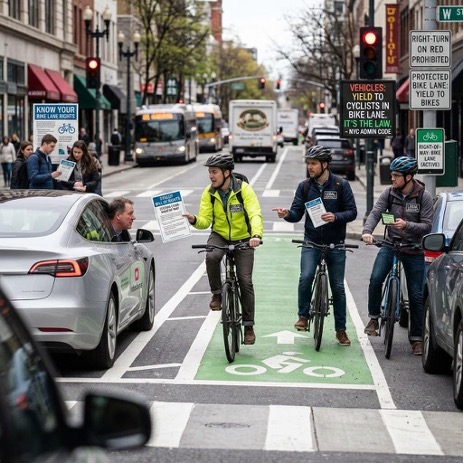
Here’s something every injured cyclist eventually discovers: after the crash comes a second battle—the battle over blame. Drivers, insurers, and sometimes even responding officers can start from a quiet assumption that the person on the bike must have done something wrong.
Knowing your legal rights isn’t about being combative. It’s about not giving away a fair recovery because someone confidently told you the crash was your fault when it wasn’t. This article walks through the most common bike-versus-car crash types, the fault arguments you’re likely to hear, and how the law actually treats cyclists. Use it as a reference—no strings attached.
First Principle: A Bicycle Is a Vehicle
In virtually every state, cyclists have the same fundamental right to the road as drivers, along with similar responsibilities. You are not a trespasser in the lane. You are traffic.
That single principle undercuts the most common thing injured cyclists hear: “You shouldn’t have been there.” If you were riding lawfully—on the road, in a bike lane, with the flow of traffic—you had every right to be exactly where you were.
The Most Common Crashes—and Who’s Usually at Fault
1. The Dooring. A parked driver flings a door open into your path. You either hit the door or swerve into traffic. Nearly every state places the duty squarely on the person opening the door: they must check that it’s safe before opening. Dooring cases are among the clearest liability scenarios in cycling—yet injured riders are still routinely told they were “riding too close.” (Riding in the “door zone” is often unavoidable where bike lanes are painted alongside parked cars.)
2. The Right Hook. A driver passes you, then turns right directly across your path—or turns right at an intersection without checking the bike lane. The turning driver generally has a duty to yield to through traffic, and a cyclist in a bike lane is through traffic.
3. The Left Cross. An oncoming driver turns left across your lane, misjudging your speed or not seeing you at all. As with motorcycles, the turning driver must yield to oncoming traffic. “I didn’t see the bike” is an admission, not a defense.
4. The Overtake / Close Pass. A driver passes too closely and clips you or forces you off the road. Most states now have safe-passing laws—commonly requiring at least three feet of clearance. A driver who couldn’t pass safely was required to wait.
5. The Driveway / Stop Sign Pull-Out. A driver rolls out of a driveway or past a stop sign, scanning for cars and not registering the cyclist. The party facing the stop sign or entering the roadway typically bears the duty to yield.
Notice the pattern: in the most common crash types, the driver had a duty to look, yield, or maintain clearance—and didn’t.
The Fault Arguments You’ll Hear (and How to Think About Them)
“You weren’t wearing a helmet.” Helmet laws vary widely, and in many states adults aren’t required to wear one. Even where insurers raise it, a helmet is irrelevant to injuries it couldn’t have prevented—your broken wrist, your shattered collarbone, your road rash. Don’t let a helmet argument shrink a claim it logically shouldn’t touch.
“You were hard to see.” Unless you violated a specific requirement (like riding at night without a legally required light), “hard to see” describes the driver’s failure to keep a proper lookout.
“You weren’t in the bike lane.” Most states allow cyclists to leave the bike lane when it’s obstructed, unsafe, in the door zone, or when preparing to turn. Bike lane position rarely means what insurers imply it means.
“You share the blame.” Most states use comparative fault—your recovery is reduced by your percentage of responsibility. This is precisely why insurers work hard to pin some fault on you: every percentage point saves them money. It’s also why what you say at the scene and to adjusters matters so much. Never speculate, never apologize reflexively, and never accept a fault assessment you don’t agree with just to be agreeable.
Evidence Wins Fault Fights
Fault disputes are rarely resolved by who argues loudest. They’re resolved by:
- Scene photos and vehicle damage patterns (a dented passenger door tells a different story than a scraped bumper)
- Independent witnesses
- Camera footage—intersections, businesses, doorbells, and increasingly, cyclists’ own bike cams and GPS data (your ride computer can prove your speed)
- The police report—and if it’s wrong, it can sometimes be supplemented or corrected
- Your preserved bike, helmet, and clothing
Gather early. Footage gets overwritten and witnesses drift away within days.
Where Legal Help Fits In
If fault is undisputed and your injuries are minor, you may not need anyone. But fault disputes are where cyclists lose the most money—accepting 50% blame for a crash that was 90% the driver’s, or letting a helmet argument slash a claim it shouldn’t touch.
A free consultation gets you an honest read on your fault picture, your state’s specific rules, and what your claim should include. No cost, no obligation—and if your situation is one you can handle solo, a good attorney will tell you exactly that. We believe informed people make good choices, and we’re content to let the facts of your case speak for themselves.
Questions? Kass & Moses, PC is at 844-Bicycle or 847-513-9582. Ride safe out there.
This article is for general information only and is not legal advice. Traffic laws, helmet requirements, and fault rules vary by state. For guidance on your specific situation, consult a licensed attorney in your area.
We proudly serve clients throughout Northbrook, Lake County, IL, and nearby areas, including Waukegan, Gurnee, North Chicago, Highland Park, Round Lake Beach, Zion, Grayslake, Libertyville, Lake Zurich, Lake Forest, Antioch, Highwood, Mettawa, Mundelein, Vernon Hills, Round Lake, Lindenhurst, and Beach Park.
Kass & Moses Personal Injury Lawyers
601 Skokie Blvd Suite 401
Northbrook, IL 60062
(847) 513-9582