
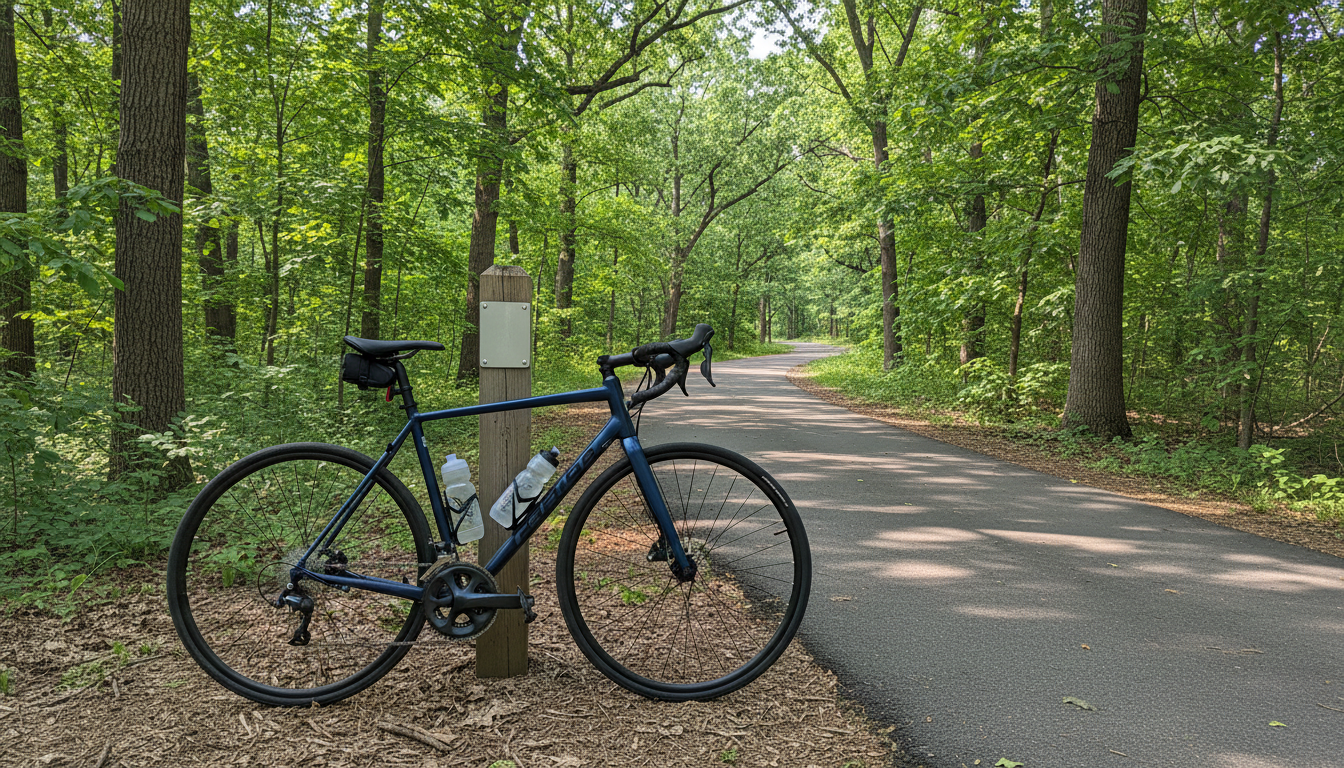
A cycling headache usually arrives one of two ways. It builds during a hard effort, or it waits an hour or two after you get off the bike and then settles in on both sides of your head. Doctors call this an exertional headache. I’ve had them for years, on the bike and off it, so I can speak to the cause and to what has helped.
One thing first: exercise headaches are common, but a headache can also signal something that has nothing to do with the ride. A headache that comes on like a thunderclap, or comes with vomiting, a stiff neck, vision changes, confusion, or weakness on one side, is a reason to get seen right away. The internet is not a substitute for medical care. It can help you understand what is going on so you can ask your doctor better questions.
For me, cycling headaches rarely strike while I’m riding. Most of the time the pain doesn’t hit until an hour or two after the ride. But once it does, it’s a throbbing, long-lasting headache that makes me think twice about the next long day in the saddle. Exercise headaches are usually described as throbbing pain that happens during or after exercise and affects both sides of the head.
I’m a frequent migraine sufferer, so headaches are not new to me. My cycling headaches feel very similar to a migraine, except they hit both sides of my head instead of one, and they follow exertion rather than arriving out of nowhere.
Head pain that follows a crash is a different problem with a different answer. That’s further down.
Understanding Cycling Headaches
Cycling headaches are sometimes called exertional headaches. During hard effort, more blood flows to the muscles of the head and neck. Blood vessels in the head, neck, scalp, and face may swell to allow better circulation. That’s one reason your face and neck flush on a climb.
Doctors generally split exertional headaches into two groups. Primary exertional headaches are the benign kind: no underlying disease, brought on by effort, and usually gone within minutes to a day. Secondary exertional headaches are caused by something else that the exercise brings to the surface, which is why a first-time, severe headache is worth a call to a physician rather than a guess.
These headaches are more common in people who already get migraines. Some people get headaches from other forms of exertion entirely. Most are harmless. Some are not, and the only way to tell the difference the first time is to have someone look.
If you have never had this kind of headache before and you suddenly have a bad one after a long ride, that’s a reason to be checked and rule out other medical causes.
What Usually Sets One Off
In Chicagoland, four things come up again and again among riders:
Heat and humidity. July and August along the Lakefront Trail can be brutal, and the stretch north of Oak Street has long gaps with no shade. Prolonged sun makes an exertional headache more likely and makes an existing one worse.
Dehydration and salt loss. Heavy sweaters lose more sodium than water alone can replace. A bottle of plain water on a three-hour ride on the North Branch Trail is usually not enough.
Neck and shoulder tension. A low bar position, a long ride into a headwind coming off the lake, and hours of looking up from the drops leave the neck muscles locked. That tension can refer pain straight into the back of the head. If your neck is the real problem, our post on neck pain from riding covers it in more detail.
Helmet and strap pressure. A helmet cinched too tight across the temples, or a rear cradle pressing on the base of the skull, can produce a band of pain that mimics an exertional headache. It’s an easy thing to rule out: loosen it a notch and see what happens on the next ride.
Low blood sugar belongs on the list too. If you’re prone to dips, a snack in the jersey pocket costs nothing.
Treatment and Prevention
Cycling and exercise headaches generally respond well to ordinary headache treatment. Ibuprofen or indomethacin are often used, since along with pain relief they reduce swelling. Any medication question, including dosing, is one for your own doctor or pharmacist.
Drink before, during, and after. A common rule of thumb is that you should feel the need to urinate about once an hour during exercise. If you aren’t, or your urine is dark, you’re probably behind on fluids. Supplement with sodium and electrolytes if you sweat heavily.
Get out of the sun early. If you feel an exertional headache starting, the usual move is to get somewhere cool and shaded, take a pain reliever, and rest. Pushing through tends to prolong the headache or make it worse.
Try a cooling band. Mine improved once I started wearing a cooling band around my neck. It kept me cooler and seemed to take the edge off the blood flow to my head and neck. It’s a roughly $20 fix.
Load up on fluids the day before. I hydrate more the day ahead of a long ride. It means a few extra trips to the bathroom, and it beats the headache.
Ask about pre-dosing. Some riders who get these regularly talk with their doctor about taking an anti-inflammatory before exercise to blunt the inflammation that contributes to the headache. That’s a conversation with a physician, not a self-experiment.
Is It a Cycling Headache or a Concussion?
This is the question that matters most, and it comes up after a spill on a wet boardwalk plank, a wheel caught in a Metra crossing groove, or a low-speed tangle with another rider on the Green Bay Trail.
An exertional headache follows effort and eases with rest, fluids, and time. Head pain after any impact is a different category. A concussion does not require losing consciousness, and it does not require your helmet to be visibly cracked. Symptoms can be delayed by hours or into the next day: headache that gets worse instead of better, nausea, sensitivity to light or noise, trouble concentrating, sleep problems, or feeling “off” in a way that’s hard to describe.
Riders who take any knock to the head are generally seen the same day, even when they feel fine at the roadside. Two reasons. The medical one is obvious. The practical one is that a gap between the crash date and the first medical visit is the first thing an insurance adjuster points to when a claim is later questioned. We wrote more about headache after a bicycle accident if that’s the situation.
A helmet that took an impact is generally replaced even if it looks intact, and the old one is worth keeping in a closet rather than the trash. It can be evidence.
After a Crash With a Driver: What Generally Happens Next
A cycling headache can ruin a Saturday. Getting hit by a car is a different order of problem. If a driver was involved, here is the general shape of what follows in Illinois.
A police report gets generated, and the report number is what the insurer will ask for first. Medical treatment starts and creates the records that document the injury. The driver’s insurer usually calls quickly and asks for a recorded statement; nothing in Illinois law requires a cyclist to give one.
A few Illinois rules that come up in bicycle cases:
- Dooring. Opening a car door into traffic is prohibited by 625 ILCS 5/11-1407. It’s a common Chicago crash, especially on streets with parking next to a bike lane.
- Shared fault. Illinois uses modified comparative fault under 735 ILCS 5/2-1116. Being partly at fault reduces recovery in proportion to that share, and being more than 50 percent at fault bars it. Insurers know this and often argue the cyclist’s share up.
- Deadlines. The general deadline to file an injury lawsuit in Illinois is two years under 735 ILCS 5/13-202. If a city, village, park district, or other local public entity is the party at fault, the deadline is generally one year under 745 ILCS 10/8-101, which matters on paths and streets maintained by a municipality or park district. Exceptions exist, and dates turn on facts, so anyone with a potential claim should confirm their own deadline with a lawyer rather than rely on a general rule.
For the step-by-step version, see our guide on what to do if you were hit by a car while riding your bike, and our explainer on cyclist rights after a crash.
When a Lawyer Usually Isn’t Needed
A headache from a hot century ride is a medical question, not a legal one. So is a solo spill on gravel with a scraped knee and a bruised ego. There’s no other party, no claim, and nothing a law office can add.
Where a lawyer generally does get involved is when another person or entity caused the crash and there are injuries with real treatment behind them, when fault is disputed, or when a driver’s insurer starts pushing a share of the blame onto the rider. We’ll say when a call isn’t necessary.
If you were struck by a motorist and are dealing with injuries, an attorney at Kass & Moses Personal Injury Lawyers can explain how a bicycle claim generally works in Illinois, including how pain and suffering damages are calculated and what a crash does to a rider mentally, which we cover in our post on PTSD after a bicycle crash. Every case is different, and results depend on the facts. We’re cyclists too, and we know what it means to get back on the bike.
Contact Our Northbrook Bicycle Accidents Law Firm Today
If you were injured in an accident in Northbrook, IL, and need legal help, contact our Northbrook bicycle accident lawyers at Kass & Moses Personal Injury Lawyers to schedule a free case review.
**Kass & Moses Personal Injury Lawyers **601 Skokie Blvd Suite 401 Northbrook, IL 60062 (847) 513-9582
[](//a.gotoloc.com/uber/FHIjTaiGX2kUqw)Frequently asked questions
Cycling combines several triggers at once: sustained hard effort, a fixed head-up position that loads the neck and shoulders, heat and direct sun for hours, fluid and sodium loss, and helmet pressure. Any one of those can bring on a headache, and long rides stack them. Riders who already get migraines tend to be more prone to exertional headaches.
Primary exertional headaches often ease within minutes to a few hours, though some linger for up to a day or two. A headache that keeps getting worse, that will not go away, or that is the worst you have ever had is a reason to be seen by a physician rather than waited out.
It can. A strap cinched across the temples or a rear cradle pressing into the base of the skull can create a band of pain that feels like an exertional headache. Adjusting the fit and trying a ride is a simple way to rule it out. A helmet that has taken an impact is generally replaced even if it looks fine, and the old one is worth keeping.
Yes. Any head pain after an impact is treated as a possible concussion until a doctor says otherwise, and symptoms can be delayed by hours or into the next day. Losing consciousness is not required for a concussion, and neither is a visibly damaged helmet. Riders who take a knock to the head are generally seen the same day.
The general deadline to file an injury lawsuit in Illinois is two years under 735 ILCS 5/13-202. If the party at fault is a city, village, park district, or other local public entity, the deadline is generally one year under 745 ILCS 10/8-101. Exceptions exist and the date depends on the facts, so anyone with a possible claim should confirm their own deadline with a lawyer.